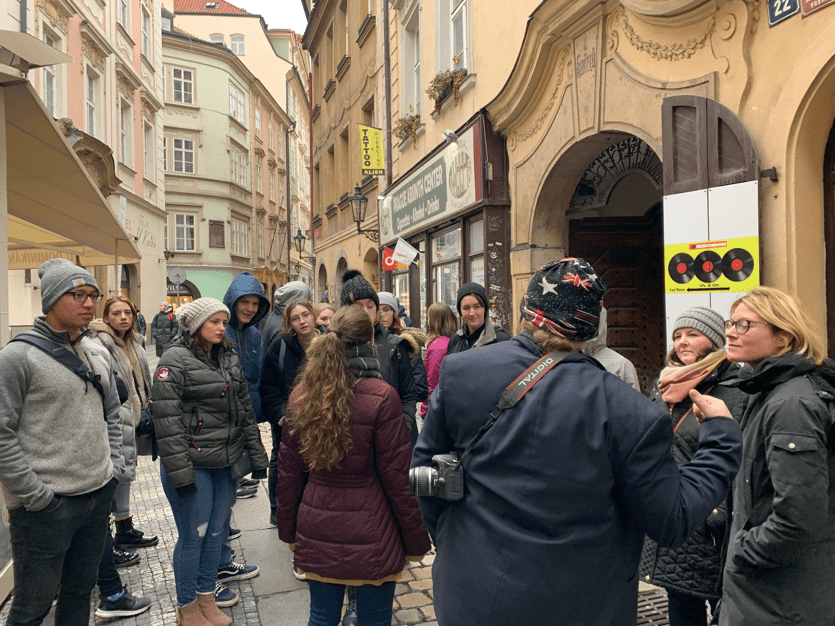
This morning our class made our way over to the Prague Creative Center to meet Ales Prochazka, a tour guide who focuses on specific topics such as the history of the communist occupation in the Czech Republic and how its impacts are still seen today. While the tour had been described to us as focusing mainly on the issue of homelessness in the Czech Republic, Ales was able to branch out into these topics and at tie them back to the way that the country approaches social work surrounding homelessness today. The tour he took us on, while not entirely unfamiliar, contained a lot of interesting information and a new point of view than what we have seen in previous tours.
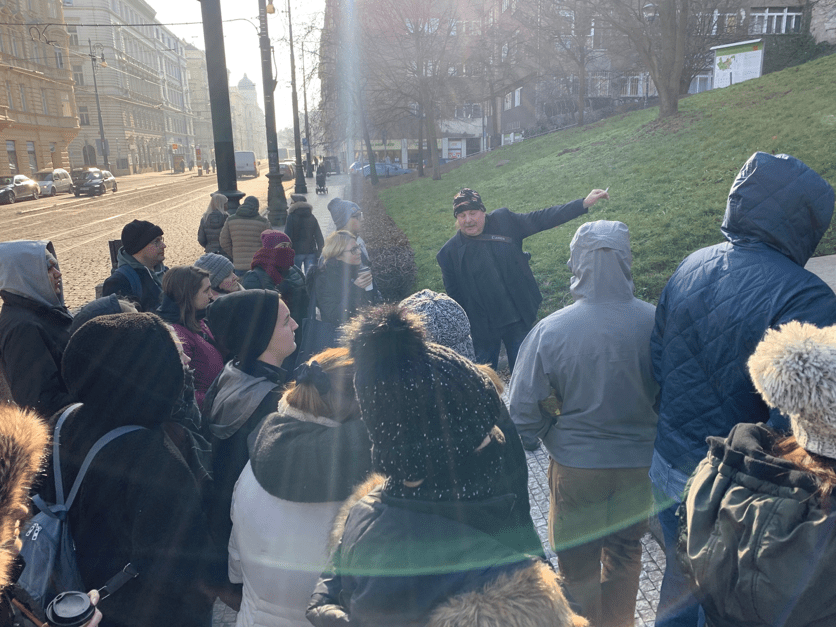
Ales took us through some of the central parts of Prague and explained to us that many of the buildings we passed, while many of them were relatively unassuming, had important histories behind them that tied them to things like the Secret Police during the occupation. We went to the sites of several different churches, explaining their histories and at times the way they were previously associated with or affected by different political regimes. As the tour went on Ales began to transition into discussing the topic of homelessness in the Czech Republic. He lived in the United States earlier in his life and let us know that social work regarding homelessness there is quite different than in the Czech Republic. Here there are very few government programs in place that provide aid for the homeless, and he explained that even when food or shelter is provided, portions are small and food banks are reserved for those who are both registered for them and have a clean slate. However, there are a number of private institutions that provide aid, but they are not associated with the Czech government.
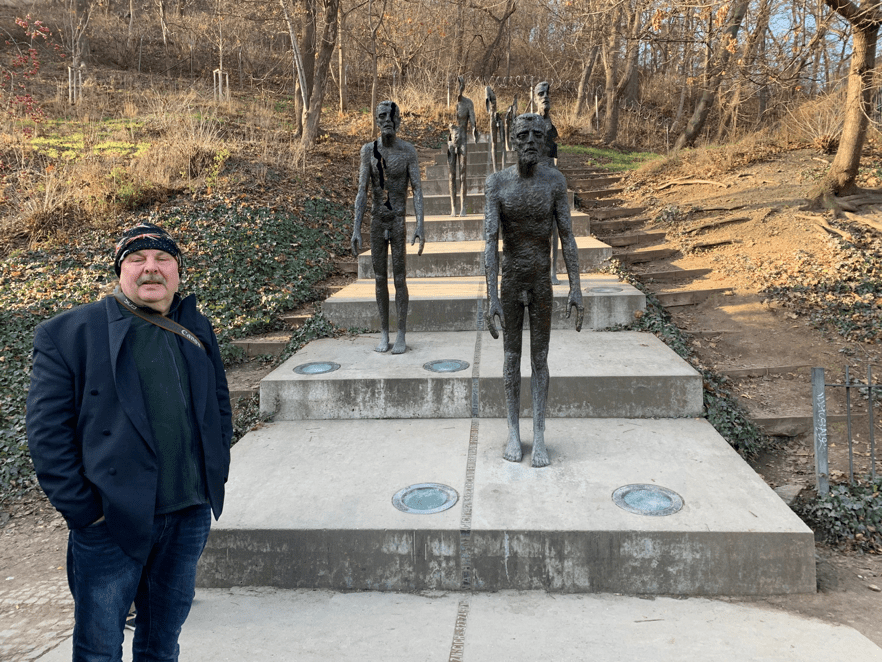
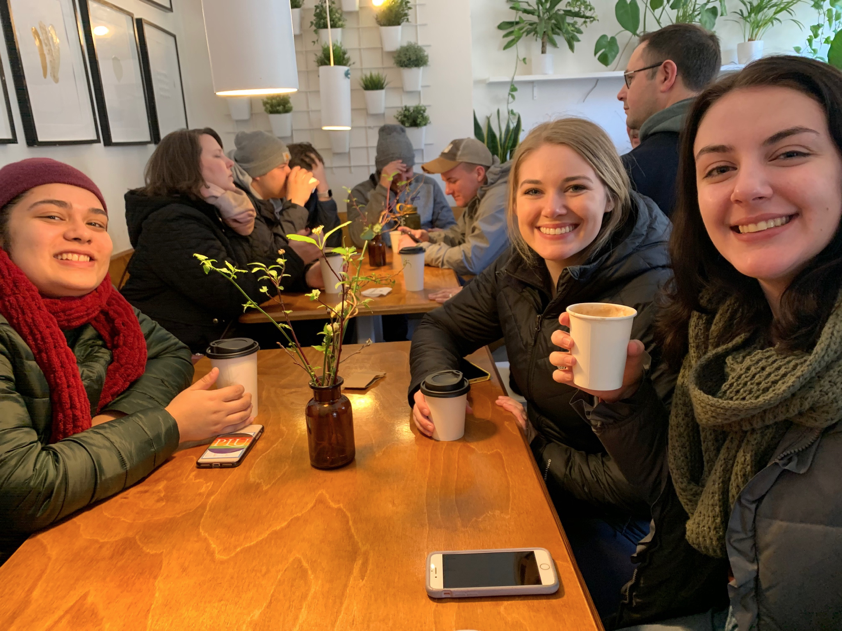
As we moved on to the US embassy Ales pointed out a space at the top of a hill that is a popular spot for homeless people to camp, telling us that even though our group had to stop midway through the tour to warm up in a café in order to continue, that this winter is considered mild in comparison to previous Czech winters. So because of the harsh winters the homeless have to endure here, it is common for 1 to 3 people to die from exposure per day. Considering how much the group had been affected by the cold today, I think facing the realities of what other people have to go through really put our own discomfort into perspective.
 PLU/PSY387 Transitions & Trauma