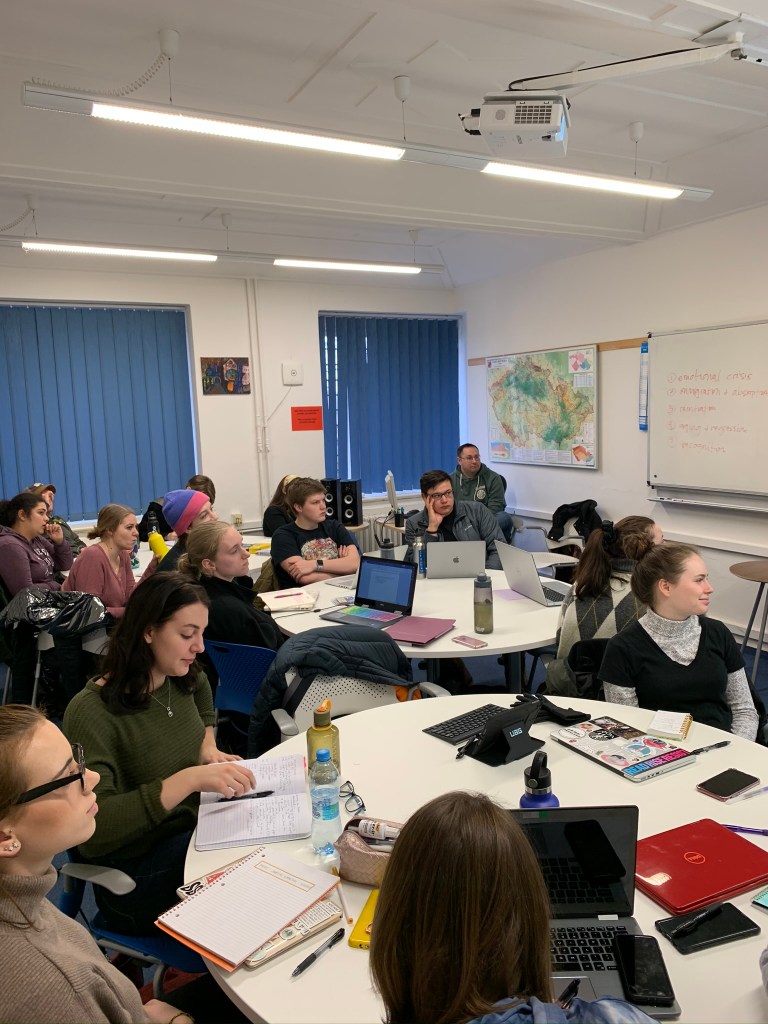
Research is the “R” word. Today, our group spent the day in class learning the meaning of psychologicalresearch as it relates to trauma and the Holocaust. Following our visit to Terezin, the class period helped us discuss the impacts of the Holocaust through a psychological lens. That is, researchers conducted much research on the psychological effects of the Holocaust on those with first hand experience as well as the generations that followed. Their results proved to be useful in understanding the ways that trauma may manifest itself within the victims of the Holocaust.
One of the most important distinctions that we discussed in class, was the difference between stress and trauma. Although stress and trauma may be similar in that someone may experience similar symptoms, trauma is different because it pertains to very significant events such as exposure to war, violence, sexual violence, and abuse. To me, trauma is acute, but can also manifest itself in long periods of time. For example, Jews experienced the trauma of initial exposure to war, life in concentration camps, and the transition to normal life if they survived. In addition, their trauma may be transferable to following generations. Nathan Kellerman posits several theories that explain the concept of trauma transmission. (Psychodynamic, Sociocultural, Family Systems, and Biological) Broadly, these theories are frameworks for how trauma may be transferable in direct and indirect ways from Holocaust survivors to their children.
However, despite learning about ways that trauma continues beyond the experiences, we also learned about ways that Holocaust survivors developed resiliency. Factors such as religion, and community contributed to Jewish resiliency during their oppression. Relatedly, survivors also developed Post Traumatic Growth in the form of increased strength, courage, and appreciation of life.
So why do I refer to research as the “R” word? I refer to research as the “R” word to highlight the negative implications it can bring. Although one can read about the experiences of Jews and learn as much as they can, their experiences will never be felt in their entirety. We cannot possibly conceptualize the trauma of Holocaust victims or truly visualize what a group of 6 million people looks like in our heads. Throughout our time in class today, I always kept in mind the position in which we approached our learning. That is, we are young, relatively healthy college students learning about the psychological effects of the holocaust in a comfortable environment. So, when it comes to the “R” word, we must recognize our inability to conceptualize their trauma. We must think about what this research means. On one hand, it serves as scientific tool that allows us to understand the severity of psychological damage. The “R” word, gives us the capacity to prevent ‘another holocaust’. It shows us the depth in which traumatic experiences affect people and what is at stake when we talk about preventing genocide. On the other hand, we must be wary of the limitations of research. Research may essentialize the experiences of Holocaust victims by characterizing their experiences only with suffering, neglecting the positive aspects of their lives. (Religion, Community, and Culture) With that I want to end this with one question. Is it ethical to value Holocaust narratives for their ‘utility’ in education?
 PLU/PSY387 Transitions & Trauma